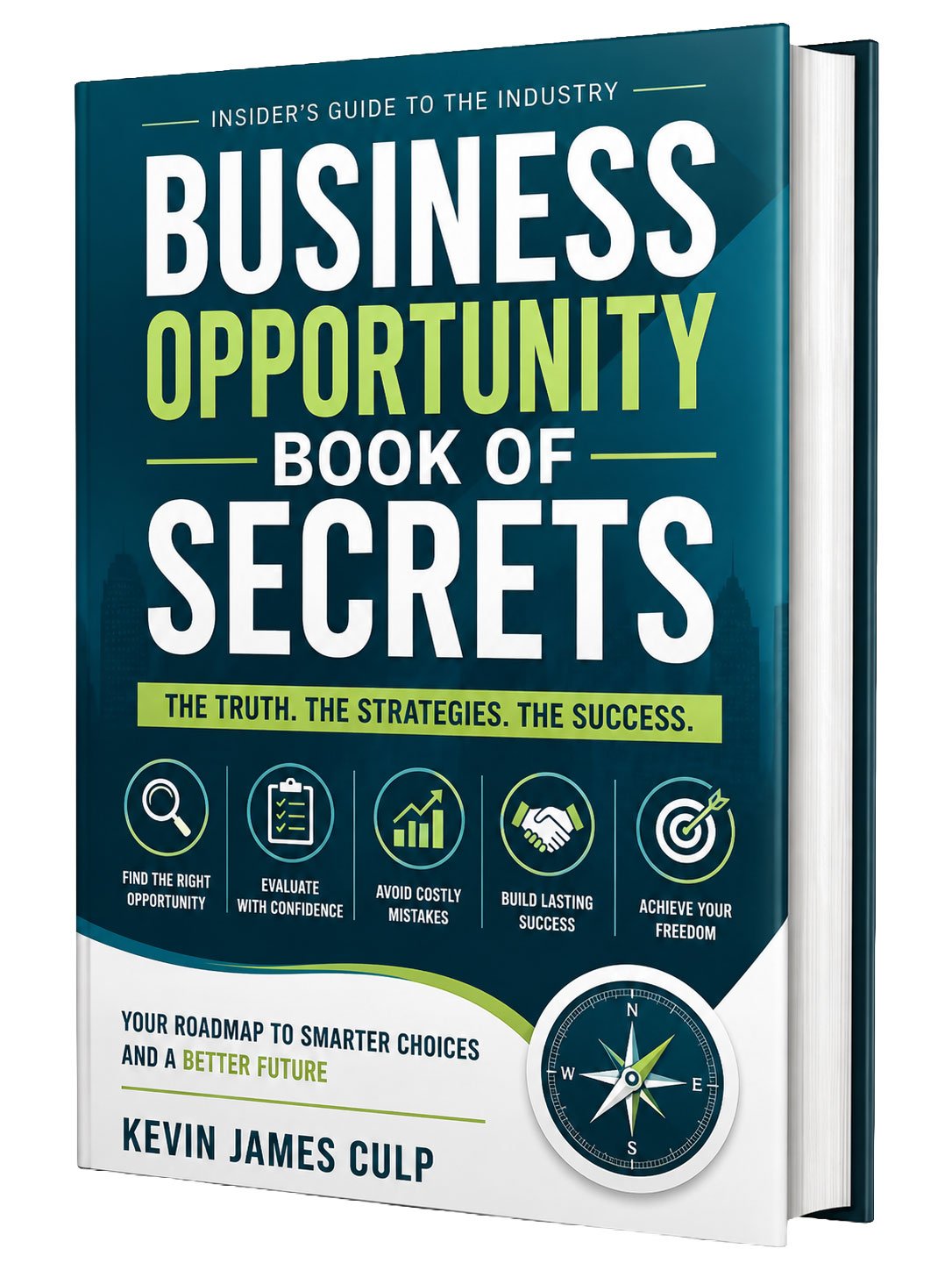

The Difference Between a Smart Investment and a Costly Mistake. If you’re reading this, chances are you’re considering a business opportunity, distributorship, licensee program, or partner deal. Whether it’s a vending machine route, an eCommerce turnkey business, or a high-ticket distributorship, the stakes are high.
By Kevin James Culp
Photo by Ana Municio on Unsplash
The problem? Many buyers ask the wrong questions — or worse — don’t ask enough questions at all. That’s how people end up paying thousands for empty promises, outdated training, or “exclusive territories” that aren’t so exclusive.
This guide is your buyer’s shield. You’ll learn exactly what to ask, why it matters, and how to verify the answers before committing a single dollar.
Section 1: Financial Transparency — Know Where Your Money Goes
1. What exactly am I paying for?
Before signing anything, break down every cost:
Initial purchase price or buy-in fee
Required equipment, software, or product purchases
Marketing/advertising fees
Ongoing royalty or revenue-sharing fees
Renewal or upgrade costs
📌 Pro Tip: If the seller can’t provide a written breakdown, walk away. Vague answers usually hide recurring “surprise” costs.
2. What is the realistic earning potential?
Ask for:
Income disclosure documents (if they’re a franchise or legally required to provide them)
Average monthly revenue for current operators
Best case, worst case, and typical case earnings
📌 SEO Anchor: Learn more about evaluating business opportunity earnings here.
3. What’s the break-even timeline?
You need to know:
How long it typically takes to recoup your investment
What factors influence that timeline
Examples from operators in markets similar to yours
If they say “you’ll be profitable in 90 days” but can’t show proof, consider that a red flag.
Section 2: Training — Included or Paid Extra?
4. What training is included in my purchase?
You need to know:
How long the training lasts
Whether it’s in-person, live online, or self-paced video
If training is customized to your market and business type
5. Is the training hands-on or theory-based?
If you’re learning sales, you should be role-playing sales calls. If it’s technical, you should actually be using the tools or equipment.
📌 Watch out: Many programs rely on generic, outdated videos that don’t match real-world conditions.
6. Are updates to training included?
Ask:
How often they update training materials
If updates are free or require a subscription
Who creates the updates (internal experts or outsourced freelancers?)
Section 3: Ongoing Support — Real Help or a Login Portal?
7. What kind of continuing help do I get?
Support can be the difference between success and failure. Ask:
Do I get a dedicated mentor or rep?
Is support live (phone/Zoom) or ticket-based?
How quickly do they respond to urgent questions?
8. What does “lifetime support” mean to you?
Some companies mean “email us and we might reply in a week.” Others mean “call us anytime.” Get it in writing.
9. Is there a community of other operators I can connect with?
Peer groups can provide:
Shared strategies
Warnings about pitfalls
Moral support during tough times
Section 4: Market Protection & Exclusivity
10. Is my territory exclusive?
If they claim exclusivity, ask:
What radius or boundaries define my territory?
Is it in writing in the contract?
Have they sold to others in this area before?
11. How do you prevent market saturation?
If everyone in your zip code can sell the same product, your revenue potential plummets.
Section 5: References and Reputation
12. Can I speak to current happy customers?
📌 Golden Rule: Never invest more than $100 without checking multiple references.Ask to speak with at least three current operators who are successful — and ideally one who struggled.
13. How long have these customers been with you?
If most customers leave after a year, that’s a warning sign.
14. Can I visit an existing operation?
Seeing it in action is the fastest way to tell if the business model is solid or smoke and mirrors.
Section 6: Legal & Contract Questions
15. Is there a cooling-off period?
Many legitimate opportunities give buyers a 3–14 day window to back out. If they don’t — beware.
16. Will you give me a copy of the contract to review before paying?
Any resistance here is a major red flag.
17. What are my exit options?
Ask:
Can I sell my distributorship/license?
Are there penalties for leaving early?
Do I have to sell back to them, or can I sell on the open market?
Section 7: Red Flags to Watch Out For
No written proof of claims
High-pressure “today only” sales pitches
No clear customer success stories
Avoids direct answers to simple questions
Inflated income claims with no documented proof
Section 8: Final Decision Checklist
Before buying, make sure you can answer “YES” to:
I fully understand all costs involved.
I know exactly how I’ll make money.
I’ve spoken to at least three happy customers.
I’ve reviewed the contract with a lawyer.
I’ve seen the business in action.
Call to Action
Owning a business opportunity can be life-changing — but only if you vet it like an investor, not a dreamer.
Ask tough questions. Demand proof. And never let high-pressure tactics push you into a bad deal.
📌 Ready to explore legit, vetted business opportunities? Visit SmartBizOpps.com for trustworthy reviews, guides, and our free Business Opportunity Vetting Checklist.
Thanks For Reading Carpe Diem My Friends
Related Content: Home-Based Hustle 2025: A Starter Guide
Sources and further reading
- Job Scams (Federal Trade Commission): How fraudulent job and work offers are advertised and how to spot them.
- Selling a Work-at-Home or Other Business Opportunity? Revised Rule May Apply to You (Federal Trade Commission): The disclosure document and earnings-claim requirements for sellers.
- Business Opportunity Rule (Federal Trade Commission): What sellers must disclose to buyers of a business opportunity.
SmartBizOpps provides information only and does not guarantee income, leads, or results.