250 Years of Ordinary People, Extraordinary Ideas, and the Courage to Begin
The history of the United States is usually told through declarations, elections, wars, migrations, court decisions, and great public movements. Those events shaped the nation, but another history was unfolding beside them, quietly, persistently, and often far from political power.
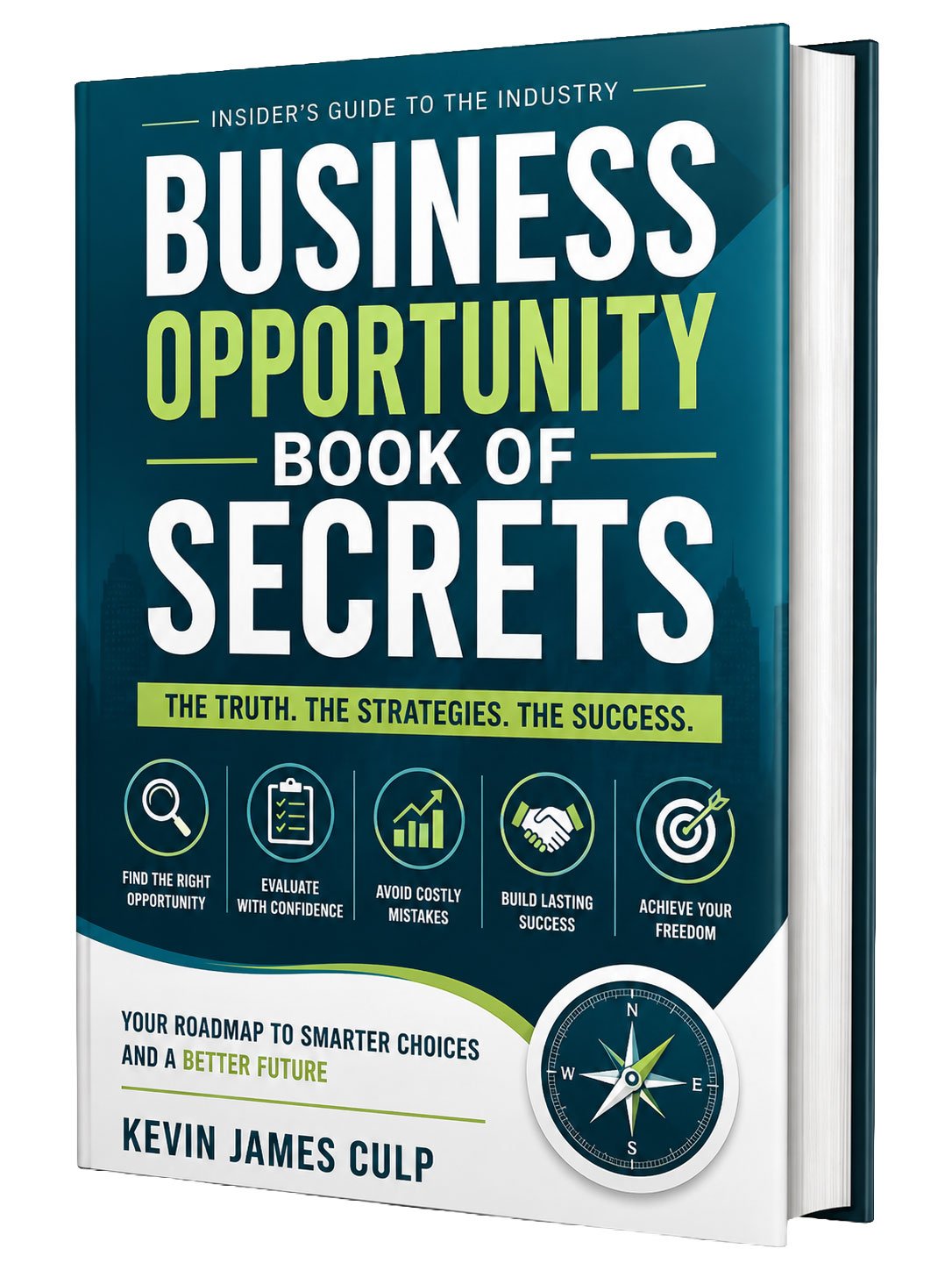
By Kevin James Culp
Photo by Brickell Media Group, LLC
It unfolded in printing shops where ideas entered circulation one page at a time. It took shape in ironworks, tailor shops, neighborhood banks, kitchens, workshops, catalogs and borrowed rooms. It appeared wherever someone recognized that a tool could work better, a customer was being overlooked, a community needed access to credit or a useful product did not yet exist.
This is the history of the American entrepreneur.
The people who created that history were not always called entrepreneurs. In the nation’s earliest years, they were more likely to be known as printers, artisans, merchants, manufacturers, inventors, tradespeople or shopkeepers. Many never led large corporations. Some never became broadly famous. A number were denied access to the institutions that later celebrated American enterprise.
What united them was not inherited wealth, social status or political influence.
They saw a need. They accepted a risk. They built something useful.
During the 250 years since the Declaration of Independence, the United States developed from a predominantly agricultural nation dependent on imported manufactured goods into one of the world’s largest and most complex economies. The Smithsonian’s American Enterprise exhibition describes that history as a continuing interaction among capitalism, democracy, labor, innovation, opportunity, wealth, success, and failure from the mid-1700s to the present.
That national transformation becomes more meaningful when seen through individual lives.
A young printer arrived in Philadelphia looking for work and built publications that carried information throughout the colonies. A widow inherited debt and a troubled ironworks, then turned it into an important American manufacturer. A Black tailor improved a process used in his trade and became the first known Black American to receive a United States patent.
Two immigrants created stronger work clothing by listening to laborers whose pants repeatedly failed under difficult conditions. The son of Italian immigrants opened a bank for workers, merchants and families whom established bankers considered unworthy of attention. A Black teacher and community organizer founded a bank so people could save, borrow, buy homes and finance businesses. A washerwoman developed products for an overlooked market and created an income-producing sales network for thousands of women.
Generations later, a single mother showed that a difficult-to-sell plastic container could succeed when customers experienced it inside their homes. A refugee from Nazi Germany turned her kitchen table into the beginning of a national mail-order company. An electronics hobbyist built a computer for people who shared his curiosity. An independent inventor improved an ordinary household tool. A young man in Queens created clothing for a market that established brands did not fully understand.
These stories are not uncomplicated legends.
American opportunity was never distributed equally. Discrimination, restrictive laws, limited access to capital, closed professional networks and social expectations kept millions of capable people from participating on equal terms. In many cases, entrepreneurship became important precisely because conventional institutions had denied people other routes to security and advancement.
That does not diminish the entrepreneurial story. It makes it more honest.
American entrepreneurship has meant invention, but also distribution. It has meant manufacturing, but also selling. It has meant individual independence, but also creating access for a larger community. It has produced great wealth in some cases. But in countless others it has meant earning a living, protecting a family, employing neighbors or building an institution that would outlast its founder.
As the United States marks the 250th anniversary of the signing of the Declaration of Independence, entrepreneurship offers a way to consider both the country Americans inherited and the nation they continue to build. America250, the congressionally established national commemoration, has made innovation and entrepreneurship part of that forward-looking conversation through America’s Startup, a competition created to recognize young founders and early-stage ideas that may help shape the country’s next 250 years.
The people in this story answered that challenge long before Americans spoke routinely of startups, founders, disruption or personal brands.
They answered it with presses, patents, products, banks, catalogs, workshops, demonstrations and storefronts.
The tools have changed.
The essential act has not.
Someone sees what is missing and decides to create it.
Before America Had “Entrepreneurs”
When the United States declared independence in 1776, it was not yet an industrially independent country. Most Americans lived in rural communities. Transportation was slow, communication depended on the printed page or personal correspondence, and commercial credit often rested on relationships and reputation.
Political independence therefore, carried an economic question: Could Americans produce, finance and distribute more of what the new nation required?
The answer did not come from one company or national plan. It emerged through the work of farmers, merchants, craftspeople, printers, manufacturers and inventors.
No early American better demonstrated the entrepreneurial power of information than Benjamin Franklin.
Benjamin Franklin: The Printer Who Built Networks
Benjamin Franklin is remembered as a Founding Father, diplomat, scientist and inventor. Before he became any of those things on a national scale, however, he was a working printer who learned that information, trust, and distribution could form the foundation of a successful enterprise.
Born in Boston in 1706, Franklin was apprenticed to his brother James, a printer and newspaper publisher. The work gave him access to books, public arguments and the physical process by which ideas became visible. It also placed him under his brother’s authority, creating tensions that eventually prompted the teenage Franklin to leave Boston.
He arrived in Philadelphia in 1723 as a young tradesman seeking employment. He did not enter the city as a statesman. He entered it with a marketable skill.
Printing became his path forward.
Franklin worked for established printers, spent time in London and eventually created his own Philadelphia operation. In 1729, he acquired The Pennsylvania Gazette. Three years later, he began publishing Poor Richard’s Almanack under the name Richard Saunders. The Library of Congress describes Franklin as colonial America’s most accomplished printer, while the Library Company of Philadelphia identifies the almanac as one of his most profitable publishing enterprises.
Franklin understood that successful publishing required more than strong writing. It required production discipline, audience knowledge, recognizable identity and reliable distribution.
He also developed partnerships with printers in other colonies, providing assistance and resources while retaining a financial interest in their operations. The arrangements allowed local printers to run their businesses while benefiting from Franklin’s experience and network.
His commercial success eventually gave him the freedom to turn toward science, diplomacy and public affairs. Yet he did not treat business merely as a method of accumulating personal wealth.
He helped establish the Library Company of Philadelphia, an early subscription library that expanded access to books. He organized a volunteer fire company and participated in educational and civic projects intended to improve life in the growing city.
Franklin’s importance to American entrepreneurial history is not simply that he became a prosperous printer.
He demonstrated that a commercial venture could create several kinds of value at once: income for its owner, work for others, useful information for customers and stronger institutions for a community.
The entrepreneur did not merely sell a product.
The entrepreneur helped make possible what had not existed before.
Building Useful Things in a Young Nation
As the United States expanded during the early nineteenth century, it needed machinery, transportation equipment, tools and reliable domestic manufacturing. The people who built those industries were not all powerful financiers. Some inherited difficult operations. Others improved the trades they already understood.
Rebecca Lukens and Thomas Jennings represent two very different versions of the early American builder.
Rebecca Lukens: The Widow Who Saved an Ironworks
Rebecca Lukens did not set out to become one of the most important manufacturers of her era.
Born in Pennsylvania in 1794, she grew up around her family’s iron business. Her father, Isaac Pennock, operated the Brandywine Iron Works, where Rebecca gained firsthand knowledge of production, materials and the commercial demands of industrial work.
After marrying Charles Lukens, she and her husband became involved in the operation. When Charles died in 1825, Rebecca was left with young children, substantial debt and a business whose future was uncertain.
The conventional expectation for a woman in her position was not to take command of a heavy industrial enterprise.
She did it anyway.
Lukens managed creditors, family disputes, legal pressures, production problems and changing markets. She preserved important customer relationships and directed the company as it produced iron plate for emerging forms of transportation and machinery.
The National Park Service’s historical documentation of the Lukens district identifies Rebecca Lukens as the central figure in the company’s nineteenth-century rise. It describes the Brandywine Iron Works as one of the leading firms in the American iron industry before the Civil War and Lukens as the only woman known to have headed a major heavy-industrial enterprise during the antebellum period.
Her achievement was not a dramatic invention or sudden breakthrough. It was the disciplined preservation and development of a difficult manufacturing operation.
She negotiated. She made production decisions. She defended her authority against people who doubted her. She carried responsibility not only for herself and her children, but also for employees, customers, and creditors whose livelihoods were connected to the company.
Entrepreneurship is often described as beginning with inspiration.
Sometimes it begins with an obligation that no one else is prepared to carry.
Rebecca Lukens carried it.
Thomas Jennings: Innovation Inside a Trade
Thomas Jennings began not as an industrialist, but as a tailor in New York City.
A skilled tailor worked directly with fabrics, stains, dyes and the daily problems of maintaining garments. Jennings used that practical experience to develop a cleaning process he called dry scouring, an important predecessor of modern dry-cleaning methods.
In 1821, he received a United States patent for the process. The U.S. Patent and Trademark Office recognizes Jennings as the first known Black inventor to receive a U.S. patent. The original document was among the early patent records lost in the Patent Office fire of 1836, but the historical record of its issuance survives.
Jennings’s achievement was remarkable for more than its technical value.
He was a free Black man obtaining legal protection for intellectual property in a nation where slavery remained lawful and Black Americans faced severe legal, economic and social barriers. He also used proceeds from his work to support abolitionist and civil-rights efforts.
Jennings’s story broadens the meaning of entrepreneurship. He did not begin by studying a fashionable market or attempting to create a large company.
He began with a problem inside a trade he already understood.
He noticed where the existing process failed.
He developed a better method.
He protected the idea.
That pattern remains familiar to entrepreneurs two centuries later.
Immigration, Main Street, and New American Markets
Immigration transformed American commerce. New arrivals established stores, workshops, farms, restaurants, laundries, financial institutions, and service businesses. They brought skills from other countries, adapted products to new markets, and created commercial networks within communities that established institutions often ignored.
For many immigrants, entrepreneurship was not a glamorous ambition. It was the most practical route available.
Chinese immigrants, for example, built increasingly self-reliant commercial communities in the face of hostility and legal exclusion. Businesses within Chinatowns provided food, employment, services, credit, communication and community organization when mainstream institutions were unwilling to do so.
The stories of Levi Strauss, Jacob Davis and A.P. Giannini show how immigrant experience could reveal markets and customers that others had overlooked.
Levi Strauss and Jacob Davis: Stronger Clothing for Working People
Levi Strauss came to the United States from Bavaria and entered the dry-goods trade with members of his family. He later moved to San Francisco during the California Gold Rush and established a wholesale business.
He did not become successful by discovering gold.
He supplied people who were doing difficult work.
One of his customers was Jacob Davis, a tailor and immigrant living in Reno, Nevada. Davis encountered a recurring problem: laborers placed so much strain on their work pants that pockets and seams repeatedly tore.
His solution was practical. He reinforced vulnerable points with metal rivets.
Davis recognized the value of the improvement but needed financial help to obtain patent protection. He approached Strauss, who supplied him with fabric.
On May 20, 1873, Davis received U.S. Patent No. 139,121, assigned to himself and Levi Strauss & Company, for an “improvement in fastening pocket-openings.” The patent described the use of metal rivets or eyelets at points where seams were especially likely to tear.
The enduring product grew from a partnership between two immigrants with different but complementary strengths.
Davis understood the problem because he made clothing for customers whose work destroyed ordinary pants. Strauss possessed access to materials, capital and distribution.
Neither man attempted to manufacture desire from nothing.
They listened to working people and improved something those customers already used.
That principle, solve a genuine problem for a clearly understood customer- remains one of the strongest foundations of entrepreneurship.
A.P. Giannini: Banking for People Other Banks Ignored
Amadeo Peter Giannini was born in California to Italian immigrant parents. He began his career in the produce business, where he learned to judge people, negotiate transactions and understand the practical needs of farmers and merchants.
His greatest contribution came from challenging the way banks decided who deserved to be served.
At the beginning of the twentieth century, many established banks focused on wealthy depositors and large commercial accounts. Immigrants, wage earners and neighborhood businesses often found it difficult to obtain credit.
Giannini believed these customers represented overlooked opportunity rather than unacceptable risk.
In 1904, he opened the Bank of Italy in San Francisco’s North Beach neighborhood. He actively sought business from immigrants, workers and small operators who had been neglected by traditional institutions.
Then came the San Francisco earthquake and fire of 1906.
Giannini protected the bank’s money and records and resumed lending from a makeshift location while much of the city’s formal financial system remained closed. The Office of the Comptroller of the Currency records that he extended loans to residents after the disaster, sometimes relying on personal knowledge and a handshake.
The bank expanded through branches and eventually became Bank of America.
Giannini’s most important entrepreneurial insight was not a new physical product. It was a different judgment about people.
Where established institutions saw immigrants with modest incomes and limited collateral, Giannini saw workers, savers, shopkeepers and homeowners who could become dependable customers when treated seriously.
He did not merely build a larger bank.
He widened the circle of people whom a bank was willing to recognize.
Enterprise as Independence and Community Power
For Americans excluded from equal access to capital, employment and professional advancement, entrepreneurship could become a form of independence.
Few people demonstrated that more powerfully than Maggie Lena Walker and Madam C.J. Walker.
They shared a surname but were not related. They built different enterprises, yet both understood that business ownership could create opportunity far beyond the founder.
Maggie Lena Walker: A Bank Built for a Community
Maggie Lena Walker was born in Richmond, Virginia, in 1864, as the Civil War neared its end. Her mother had been enslaved, and Walker came of age in a society that imposed severe legal and economic restrictions on Black Americans.
She became a teacher and joined the Independent Order of St. Luke, a Black mutual-aid organization that supported members during illness, hardship and death.
Walker helped turn that organization into a broader economic force.
She promoted education, saving, business ownership and collective advancement. She also led the organization’s newspaper, understanding that information, communication and economic organization were inseparable.
In 1903, she chartered the St. Luke Penny Savings Bank in Richmond. The Library of Congress identifies Walker as the first Black woman in the United States to establish and lead a bank. The National Park Service preserves her Richmond home and recognizes her work as a bank president, newspaper editor, civil-rights advocate and champion of economic empowerment.
The bank encouraged customers to save even small amounts. It made loans, helped people acquire homes and provided capital to business owners who had difficulty obtaining fair treatment elsewhere.
Walker understood that entrepreneurship required more than celebrating isolated examples of personal success.
A community needed institutions.
It needed banks willing to lend, newspapers able to inform, businesses able to employ and organizations capable of circulating money within the community.
Her bank did not erase the discrimination its customers faced. It gave them tools for building ownership despite it.
Walker deserves a central place in American entrepreneurial history because she built a system through which other people could advance.
The most consequential entrepreneurs do more than create customers.
They create participants.
Madam C.J. Walker: Products, Training and a Path to Income
Madam C.J. Walker was born Sarah Breedlove in Louisiana in 1867. Her parents had been enslaved, and she was orphaned as a child. For years, she supported herself through physically demanding laundry work.
Her business began with a problem she understood personally.
Like many Black women of her time, Walker experienced hair and scalp difficulties in an era when appropriate products and professional care were difficult to obtain. She experimented with preparations, learned from existing beauty businesses and eventually began developing and selling products intended for Black women, a market largely disregarded by mainstream manufacturers.
After moving to Denver, she adopted the professional name Madam C.J. Walker and built a recognizable brand. She sold directly to customers, advertised in Black newspapers and expanded through mail order.
Her greatest innovation may have been the system surrounding the products.
Walker recruited and trained representatives known as Walker Agents. They demonstrated products, educated customers and built businesses in their own communities. Her company eventually distributed products nationally and internationally, helping thousands of Black women obtain income and professional skills at a time when their employment opportunities were sharply restricted.
The National Park Service documents Walker’s development from a washerwoman earning a small daily wage into a manufacturer, marketer, philanthropist and one of the wealthiest businesswomen in the country.
Her success is often summarized by the claim that she became America’s first self-made female millionaire. The phrase conveys the scale of her achievement but not its full importance.
Walker built manufacturing, branding, distribution and training systems. She recognized an underserved customer. She understood that representatives needed education, incentives and a credible path to advancement. She used her influence and resources to support education, philanthropy and civil rights.
Her enterprise created wealth for its founder, but it also created earning opportunities for women who had few comparable paths to economic independence.
A business can solve a customer’s problem.
A powerful entrepreneurial system can also change the economic position of the people who carry it into the market.
Selling Ideas, Not Just Products
By the middle of the twentieth century, American entrepreneurship was increasingly shaped by national media, expanding consumer markets, suburban households and new methods of direct selling.
The successful entrepreneur did not always invent the product.
Sometimes the breakthrough came from discovering how customers needed to experience it.
Brownie Wise: The Woman Who Taught America to Buy Plastic
Tupperware was technologically inventive. Its flexible plastic containers and airtight seals offered a new method of storing food. Yet the products initially struggled in conventional retail stores.
Customers were unfamiliar with plastic food containers, and many did not immediately understand how the lids worked.
Brownie Wise recognized that the problem was not necessarily the product.
It was the method of selling it.
Wise, who had worked as a secretary and was raising a son, entered direct sales and began using home gatherings to sell household products. She discovered that Tupperware became far easier to understand when demonstrated in person.
An unfamiliar plastic bowl sitting silently on a store shelf became useful and convincing when someone showed how the seal worked.
Wise’s results attracted the attention of Earl Tupper. In 1951, she became vice president of Tupperware Home Parties and helped develop a national sales system based on demonstrations, social relationships, recognition and independent representatives.
The Smithsonian credits Wise with developing a sales plan that enabled people across the country—especially women, to earn money by marketing products from their homes. It also preserves her papers and business records from her years as a Tupperware executive.
Wise understood something that remains central to selling.
Customers do not always purchase an object after reading a list of features.
Sometimes they need to see the change the object makes possible.
She turned explanation into experience and experience into distribution.
Her career also carried a warning. Despite her central role in Tupperware’s growth and public identity, Wise was dismissed from the company in 1958. For years, her contribution received less attention than the product and the company’s male founder.
The history of entrepreneurship includes people who created enormous value without retaining ownership or control of what they helped build.
Wise deserves recognition because she solved the problem that determined whether an innovative product would remain a curiosity or enter millions of American homes.
Lillian Vernon: A National Business From the Kitchen Table
Lillian Vernon was born Lilli Menasche in Germany in 1927. Her Jewish family fled Nazi persecution and settled in the United States.
As a young mother, Vernon began a mail-order business from her kitchen table in 1951. She initially advertised personalized handbags and belts and discovered that consumers responded strongly to merchandise that felt individual, useful, and suitable for gifts.
The business grew into the Lillian Vernon Corporation, whose catalogs offered personalized products, household items, children’s merchandise and gifts to customers throughout the country. The Smithsonian’s National Postal Museum recognizes Vernon as a major figure in American catalog retailing and records the company’s founding in 1951.
Her entrepreneurial strength lay partly in product selection.
She did not have to invent every item. She had to understand which products would appeal to customers, present those items persuasively and create a reliable system for processing and fulfilling orders.
That model connected a kitchen table to a national market.
Long before online commerce became commonplace, mail-order entrepreneurs faced many of the same challenges experienced by modern digital sellers:
They had to attract attention without relying on a physical storefront. They had to present products clearly enough that customers would purchase without seeing them in person. They had to manage inventory, ordering, payment and fulfillment. They had to earn enough trust for a buyer to send money and wait for delivery.
Vernon built through merchandising, direct-response advertising and customer knowledge.
Her career demonstrated that a home-based beginning need not determine the eventual scale of a business.
Many enterprises start small because small is where the founder has room to begin.
Robert G. Culp Jr.: Building a Family Manufacturing Company
Not every important American entrepreneur became a household name. Some built lasting companies by learning one industry deeply, serving customers consistently and growing one practical step at a time.
Robert G. Culp Jr. followed that path.
After years of experience in the upholstery-fabric industry, Culp founded Culp, Inc. in High Point, North Carolina, in 1972. He launched the company with his son, Robert G. Culp III, beginning as a fabric-converting business serving furniture manufacturers. Over time, the company expanded into the production and distribution of upholstery and mattress fabrics.
The company’s development reflected a form of entrepreneurship that receives less attention than the dramatic invention or technology startup. Culp built from industry knowledge. He understood the materials, manufacturers and service problems within the home-furnishings market. Rather than trying to create an entirely new industry, he identified where an established industry could be served more effectively.
That approach helped turn a family business into an international fabric supplier headquartered in High Point, long associated with the American furniture industry. The company remained connected to the family across generations, with Robert G. “Iv” Culp IV later becoming its president and chief executive officer.
Robert G. Culp Jr.’s story represents an essential but often overlooked part of American entrepreneurship: the experienced industry professional who eventually decides to build a company of his own.
He did not begin with celebrity, a revolutionary invention or a vast financial empire.
He began with knowledge earned through work, and turned that knowledge into an enterprise that endured.
The Garage, the Workshop and the Digital Frontier
The late twentieth century produced celebrated technology companies and enormous fortunes. Yet the useful entrepreneurial lessons can disappear when the story focuses only on corporate valuations and celebrity founders.
The more instructive history begins earlier, with hobbyists, prototypes, customer demonstrations and small groups experimenting before the market was obvious.
Steve Wozniak: Building a Computer for People Like Himself
Steve Wozniak was an electronics enthusiast fascinated by designing capable systems with relatively few components.
During the 1970s, computers were associated mainly with governments, universities and large corporations. They were expensive, physically imposing and inaccessible to most individuals.
Wozniak attended meetings of the Homebrew Computer Club, a community of hobbyists who shared technical knowledge and imagined a future in which individuals could own and use computers.
In 1976, he demonstrated the prototype Apple-1 at the club. The Computer History Museum describes Homebrew as a forum where experimenters shared designs and ideas. A local retailer, the Byte Shop, ordered 50 assembled Apple-1 boards, providing the commercial opening that helped move the project from hobbyist experimentation into a new company.
The Apple II followed with color graphics, an integrated keyboard and a more consumer-friendly form.
Wozniak’s contribution was not simply technical brilliance.
He designed within constraints. He simplified circuitry. He built for a community he understood because he belonged to it.
The Apple story eventually became one of the largest corporate stories in the world. Its entrepreneurial origin, however, was smaller and more recognizable.
Someone built a product for people who shared his interests.
Someone else recognized that the community might represent the beginning of a much larger market.
Joy Mangano: Improving an Ordinary Household Tool
Entrepreneurial history often favors dramatic technologies. Yet many successful inventions begin with frustration over an ordinary task.
Joy Mangano became widely known for the Miracle Mop, a self-wringing household mop designed to reduce the need for users to handle dirty water.
The product did not emerge from a corporate research laboratory. Mangano developed it while managing work and family responsibilities, then confronted the practical challenges of production, financing and sales.
The Smithsonian’s Lemelson Center identifies the Miracle Mop as the invention that established her career and notes that Mangano has held more than 100 patents.
Her story illustrates the importance of founder-led selling.
An inventor may understand not only how a product works, but why the problem matters emotionally and practically to the customer. Mangano could demonstrate the mop as someone familiar with the frustration it was designed to solve.
The product was not glamorous.
The problem was real.
That has always been enough to begin.
Daymond John: A Brand Built From Cultural Understanding
Daymond John began developing FUBU in Queens, New York, with limited capital and a direct understanding of the customer he wanted to serve.
The earliest products included hats made at home and sold locally. John and his partners created clothing connected to the identity, language and style of a market that larger companies often observed from the outside.
FUBU—For Us, By Us—communicated more than a product category. It expressed cultural credibility and ownership.
John has described the company’s early growth as a combination of home production, persistence, barter, strategic product placement and close relationships with performers and customers. His mother supported the business by allowing the house to become a working space and later taking significant financial risk to help it expand.
FUBU’s development demonstrates another recurring entrepreneurial pattern.
Large companies can overlook or misunderstand a market because they lack proximity to the people inside it.
An entrepreneur who belongs to that market sees signals outsiders miss.
John did not need to be informed that the customer existed.
He understood the customer’s world because it was also his own.
The Entrepreneur Next Door
The most important figure in American entrepreneurial history may not be any of the people profiled above.
It may be the entrepreneur whose name never enters a history book.
The United States was built not only by patent holders, famous founders and nationally recognized brands. But also by millions of local operators whose work became part of everyday life.
They ran farms, restaurants, repair shops, printing businesses, laundries, construction companies, stores, transportation services, professional practices and home-based enterprises. They employed neighbors, trained workers, paid suppliers, extended credit and provided services that larger institutions could not deliver efficiently.
Today, the United States has approximately 36.2 million small businesses. They account for 99.9 percent of American businesses and employ about 62.3 million people, representing 45.9 percent of private-sector employment. More than 82 percent of those businesses have no paid employees, underscoring how much of American enterprise consists of individual operators rather than companies with large staffs.
Modern technology has changed the tools available to these entrepreneurs.
A consultant can sell expertise without maintaining an office. An artisan can reach buyers through an online marketplace. A service provider can manage scheduling, payments and advertising from a phone. A veteran can translate military logistics or technical experience into a civilian company. An immigrant can connect a neighborhood market with customers and suppliers around the world. A parent can operate an online store from home.
But the underlying work remains familiar.
The entrepreneur must still understand a customer.
The entrepreneur must still control costs.
The entrepreneur must still earn trust.
The entrepreneur must still deliver what was promised.
The entrepreneur must still survive mistakes, delays, rejection and uncertainty.
American entrepreneurship is sometimes distorted by the assumption that every founder must be pursuing enormous wealth, national recognition or explosive growth.
Most are not.
Many start businesses because they want greater control over their time. Some are responding to a layoff, a move, limited employment options or changing health. Some want work that can accommodate family responsibilities. Others recognize a local need. Some inherit a business and fight to preserve it. Some begin with a professional skill and gradually learn how to sell it.
Their companies may never become household names.
That does not make them insignificant.
A small enterprise can change the life of the person who owns it, the family that depends on it, the workers it employs and the customers who would otherwise go without the product or service it provides.
That is not a lesser form of entrepreneurship.
It is the most common form.
The Next American Entrepreneur
For 250 years, American entrepreneurship has rarely begun with certainty.
It began with a young printer looking for work in Philadelphia.
It began with a widow facing debt and an ironworks that might fail.
It began with a tailor trying to improve a process within his trade.
It began with immigrants strengthening work clothing and extending credit to neighbors.
It began with a teacher and organizer creating a bank so people in her community could save and borrow.
It began with a washerwoman developing products and selling them directly to women whom established companies had ignored.
It began with a salesperson realizing that customers needed to see a product demonstrated inside their homes.
It began with a refugee arranging merchandise on her kitchen table, an engineer presenting a circuit board to fellow hobbyists, an inventor improving a mop and a young man sewing hats for customers he understood.
What made these people extraordinary was not that they began above everyone else.
It was that they began where they were.
They used the skills, experience, relationships and resources available to them. They created value where none had existed. They made mistakes. They encountered closed doors. They adjusted. They continued building.
Their stories should not be misused as proof that success is easy or that every barrier can be overcome through determination alone. History is more complicated than that.
But their lives demonstrate something enduring.
Innovation does not belong only to laboratories.
Business does not belong only to corporations.
Opportunity does not belong only to people who already possess wealth.
Entrepreneurship begins wherever someone pays close enough attention to notice that something could be done better.
As the United States celebrates its 250th anniversary, the country is still being built in workshops, stores, kitchens, garages, service vehicles, home offices and online marketplaces.
Somewhere today, another ordinary person is identifying a problem, drawing a plan, testing a product, contacting a first customer or accepting a risk.
That person may never become famous.
That person may still change a community.
The next chapter in the history of American entrepreneurship will not necessarily begin on Wall Street or in Silicon Valley.
It may begin at a kitchen table.
It may begin in a small town.
It may begin after a layoff, an illness, a move or an ordinary moment of frustration.
It may begin with someone saying:
There has to be a better way.
And then deciding to build it.
👉 Explore the SmartBizOpps today, and start building your opportunity, your way.
Thanks For Reading Carpe Diem, My Friends
Related Content: How To Choose The Right Business Opportunity
Sources and further reading
- Launch your business (U.S. Small Business Administration): Steps to start a business, including choosing a structure, registering, and getting licenses and insurance.
- Need Help with Your Business Goals? Consider a Mentor (U.S. Small Business Administration): How a mentor can help and where to find one.
- SBA Resource Partners (U.S. Small Business Administration): Free counseling and mentoring through SCORE, Small Business Development Centers, and other partners.
SmartBizOpps provides information only and does not guarantee income, leads, or results.