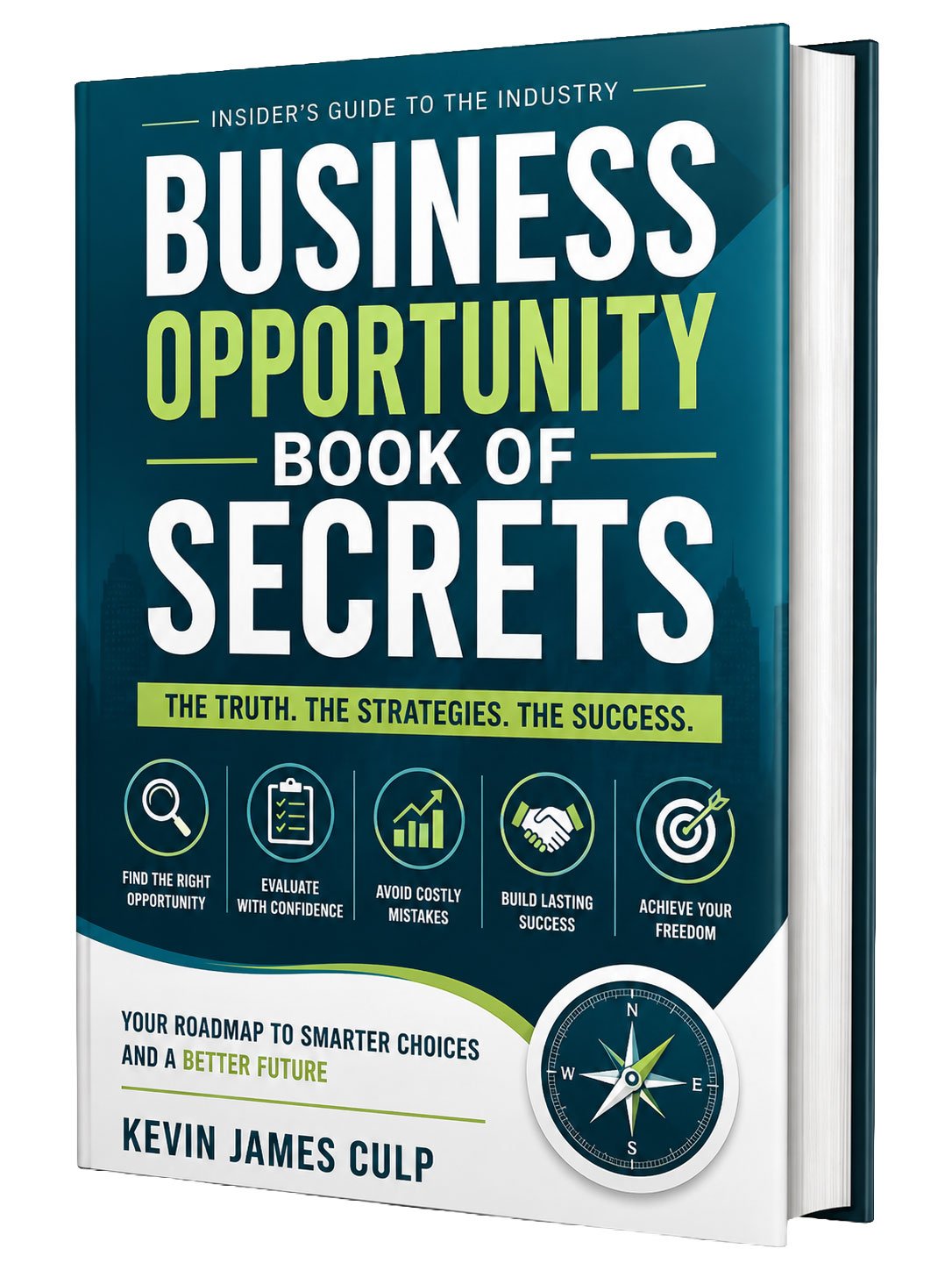

A business opportunity is a ready-made way to go into business for yourself: you pay for, or invest in, a product, system, brand, or existing company so you do not have to invent everything from scratch. It can be a franchise, a turnkey business, a distributorship, a direct-sales program, a vending route, or the purchase of an established local company. What they share is that someone else has already done part of the work, and you are paying for that head start.
That head start is the whole appeal, and also the whole risk. A good opportunity saves you months of trial and error. A bad one sells you a promise. This guide explains, in plain English, what a business opportunity is, how it differs from starting a business on your own, what you typically pay for, and how to judge whether one is worth your money and time.
The simple definition
When people search for a “business opportunity,” they usually mean an offer where a seller provides something of value (a product line, a method, a brand name, a customer list, equipment, training, or support) and the buyer supplies the money and the labor to run it. The buyer becomes the owner, takes the day-to-day risk, and keeps whatever profit remains after costs.
Regulators use a narrower, legal definition. In the United States, the Federal Trade Commission has a Business Opportunity Rule that covers certain commercial arrangements where a seller says you will earn money from products or services you buy from the seller. Franchises fall under a separate rule. Because the legal definitions vary by state, it is worth reading the paperwork you are given rather than assuming a label tells you what protections apply.
What you are actually buying
Almost every opportunity bundles some mix of the following:
- A brand or name that customers may already recognize.
- A proven process: written systems for sales, service, pricing, hiring, and bookkeeping.
- Training and support, which can range from a weekend course to ongoing coaching.
- Products, inventory, or equipment you resell or use to deliver a service.
- Customers or territory, such as an established route or an exclusive area.
- Marketing assets: websites, lead generation, templates, and advertising programs.
Before paying, make a list of which of these you are receiving and which you are not. Many disappointed buyers discover later that the “system” was a few documents and the “support” was a phone number.
Business opportunity vs. starting from scratch
| Factor | Business opportunity | Starting from scratch |
|---|---|---|
| Upfront cost | Often higher, because you pay for the head start | Can be very low |
| Speed to first customer | Usually faster | Usually slower |
| Freedom to change things | Limited by contract or brand rules | Total |
| Ongoing fees | Common (royalties, marketing funds, software) | Only what you choose |
| Risk of an unproven idea | Lower, if the model is genuinely proven | Higher |
| Best for | People who want structure | People who want full control |
Neither route is better in the abstract. If you like following a playbook and can afford the fees, an opportunity can reduce guesswork. If you have a specialized skill and a low-cost way to reach customers, building your own may leave you with more of the profit. Our guide to franchise versus independent business opportunities walks through this trade-off in more depth.
Common forms a business opportunity takes
You will see the same handful of structures again and again. Franchises give you a brand and a system in exchange for fees. Turnkey businesses are set up for you to operate on day one. Distributorships and direct-sales programs let you sell a company’s products. Independent routes, such as vending or ATM routes, sell you equipment and sometimes locations. Buying an existing company hands you the customers, staff, and cash flow already in place; see how to buy an existing business for the due diligence steps. You can browse real examples in each category among the listings on SmartBizOpps, which are provided by the companies themselves.
What it usually costs
Costs vary enormously, from a few hundred dollars for a starter kit to well over six figures for a franchise or an established business. Look beyond the headline price and add up:
- The initial fee or purchase price.
- Equipment, vehicles, build-out, or inventory.
- Licenses, permits, and insurance.
- Working capital to cover the months before the business pays you.
- Ongoing royalties, advertising contributions, software, and renewal fees.
The working-capital line is the one most buyers underestimate. Plan to cover your living expenses and the business’s costs for longer than the seller suggests.
How people actually make money (and why many don’t)
Income comes from selling products or services at a price above your cost, repeatedly, to enough customers. No legitimate seller can promise a specific result, because outcomes depend on your location, effort, skills, competition, and plain luck. Be wary of anyone who guarantees earnings. In a franchise sale, you are entitled to a Franchise Disclosure Document at least 14 calendar days before you sign or pay, and it may include an earnings claim in Item 19. If a seller will not put income claims in writing, treat verbal claims as marketing.
Warning signs
- Pressure to decide today, or a “last spot in your area” claim you cannot verify.
- Earnings promises with no written backup.
- Refusal to give you a list of current owners to call.
- Vague answers about total cost or refund terms.
- Demands for payment by wire, gift card, or cryptocurrency.
Our checklist of 12 red flags to check goes deeper on spotting trouble before you pay.
Is a business opportunity right for you?
Ask yourself a few honest questions. Can you afford to lose the money you invest? Are you willing to work the business hard for at least a year? Do you enjoy the daily work, not only the idea of owning something? Do you have the skills to sell and manage people, or the willingness to learn? If you are still weighing a smaller step, a side hustle that grows into a business lets you test the market with less risk.
Frequently asked questions
Is a business opportunity the same as a franchise?
No. A franchise is one type of business opportunity, with its own federal disclosure rules and a continuing relationship with the franchisor. Other opportunities may involve no brand license at all.
Are business opportunities legitimate?
Many are, and many people run successful businesses this way. Others are misleading. The structure itself is not the problem; the promises and the paperwork are what you need to check.
How much money do I need to start?
It depends on the model. Some home-based options start under a few thousand dollars, while franchises and established businesses often require significant capital plus working reserves.
Should I talk to a lawyer?
Yes, before signing anything. An attorney and an accountant who know small-business purchases can catch terms you might miss.
The bottom line
A business opportunity is a shortcut with a price tag: you trade money for a head start, and you accept fees and rules in return. It works best when you understand exactly what you are buying, have verified the seller’s claims with current owners, and have enough cash to survive the slow early months. Take your time, read every document, and walk away from anyone who rushes you.
Photo by Clever Visuals on Unsplash
This article is general information, not financial, legal, or tax advice. Costs, earnings, and requirements vary by location and by opportunity, so verify details with the company, your state, and a qualified professional before you invest. Listings on SmartBizOpps are provided by advertisers; SmartBizOpps does not endorse or guarantee any opportunity.