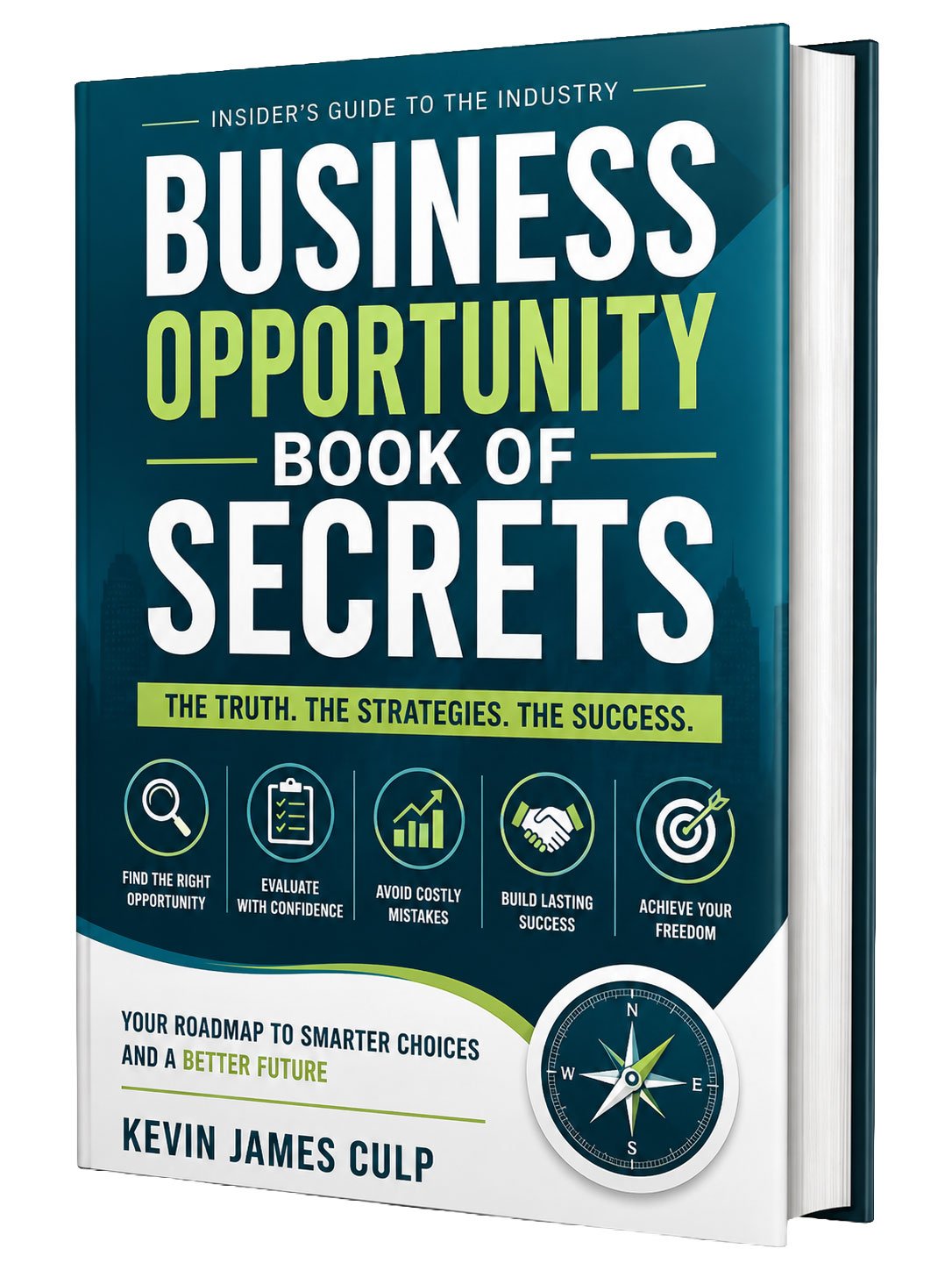

A good chunk of the people who land on SmartBizOpps aren’t looking for a business they can run from one fixed location, they’re looking for a business opportunity that travels with them. Digital nomads are one of the fastest-growing audiences I see browsing listings, and I wanted to write directly to that group about what actually works and what doesn’t, based on patterns I’ve seen repeat across dozens of listings and conversations with people actually living this way.
Why Digital Nomads Need a Different Kind of Business Opportunity
Most traditional business opportunities assume you’ll be in the same place for years: a retail listing, a service territory, a physical location with regular hours. None of that works if your address changes every few months. What does work is a business opportunity built around a laptop, a decent internet connection, and systems that don’t care what time zone you’re in when you log on.
That narrows the field considerably, but it doesn’t shrink it to nothing. Location-independent business opportunities generally fall into a few buckets: remote-service partnerships, e-commerce and dropshipping operations, content and affiliate-based models, and coaching or consulting built on a system someone else has already tested.
What to Look for in a Location-Independent Business Opportunity
- Everything runs through a browser or app, no requirement to be physically present anywhere
- Support and training are asynchronous or recorded, not scheduled calls tied to one time zone
- Payments and banking don’t require a fixed domestic address to operate
- The time commitment is honestly described in hours, not vague “work when you want” language with no real structure underneath it
I’d add one more that doesn’t get talked about enough: internet reliability where you’ll actually be. A business opportunity that depends on live video calls or real-time customer response is a poor fit if you’re planning to spend two months somewhere with patchy connectivity.
The Tax and Legal Side Nobody Wants to Deal With
Running a business opportunity while living abroad or moving between countries doesn’t exempt you from U.S. tax obligations if you’re a U.S. citizen, the IRS still wants to hear from you, and self-employment tax rules don’t pause because you’re overseas. I’m not a tax advisor, and I’d strongly encourage anyone serious about this path to talk to one who understands both self-employment income and whatever countries you’re planning to spend time in. It’s a much cheaper conversation to have upfront than to have after a filing mistake, and many tax professionals who specialize in expatriate and remote-work situations now offer remote consultations specifically for people in exactly this position.
Setting Realistic Expectations
The nomad lifestyle gets romanticized online in a way that sets people up to be disappointed. A business opportunity that supports travel doesn’t usually replace a full salary in month one. Most people who make this work treat the first several months as a runway-building phase, keeping costs low, staying in affordable locations, and reinvesting early income, before they expect the business to fully fund the lifestyle.
Building a Connectivity Safety Net Before You Need It
The single most disruptive thing that can happen to a location-independent business opportunity is losing reliable internet access at a bad moment, mid-client-call, mid-launch, mid-deadline. I’d never rely on a single connection source when traveling. A local SIM with data, a backup mobile hotspot device, and knowledge of at least two or three co-working spaces or reliable cafes in whatever city you’re staying in gives you real redundancy. It sounds like overkill until the one day your primary connection drops right when it matters most, and by then it’s too late to set up a backup.
I’d also build buffer time into any client-facing commitment. If you tell a client you’ll deliver something Tuesday, aim to actually finish it Monday. Travel introduces unpredictable friction, delayed transit, unexpected accommodation issues, time zone math errors, and that buffer is what keeps a single bad day from becoming a broken client relationship.
Why the Nomad Community Matters More Than People Expect
Beyond the practical logistics, I’d encourage anyone pursuing a digital nomad business opportunity to deliberately plug into the broader nomad community, even if you consider yourself an introvert who’d rather work alone. Other nomads running their own business opportunities are often the best source of real, current information about visa changes, good co-working spaces, reliable local services, and honest feedback on whether a specific business model is actually working for people in your situation right now. Online communities and in-person meetups in nomad hub cities both serve this purpose, and the relationships that come out of them often outlast any single location.
There’s also a less obvious benefit: accountability. It’s easy to let a business slide when nobody around you knows or cares whether you worked today. A community of people pursuing similar business opportunities, even a loose one, provides a kind of social accountability that a traditional job’s management structure would have provided automatically.
Why Slower Travel Usually Beats Constant Movement
A common mistake I see with new digital nomads trying to run a business opportunity is moving too fast between locations. Changing cities or countries every week looks exciting on social media, but it’s genuinely hard on a business, new time zones, new routines, new everything, over and over, with almost no time to build momentum in between. The nomads I’ve seen build the most sustainable business opportunities tend to settle into a location for a month or more at a time, treat the first several days as a transition period rather than productive work time, and resist the urge to pack every trip itinerary with movement at the expense of consistent business hours.
Slower travel also tends to be cheaper, which matters directly to the business math. Monthly accommodation rates, local resident discounts, and the ability to cook your own meals rather than eating out every day all add up, and that lower cost of living is often the real financial advantage of the nomad lifestyle, not necessarily higher income, but meaningfully lower expenses relative to a comparable life in a major U.S. city.
Banking and Payments While You Travel
A business opportunity that pays you is only useful if you can actually access that money reliably while abroad. Traditional U.S. banks sometimes flag or freeze accounts over unusual international activity, so I’d set up at least one account specifically built for travelers, one with low or no foreign transaction fees and a track record of working smoothly across many countries, before you leave rather than scrambling to fix it from somewhere with unreliable banking support. The same goes for how clients pay you: confirm your payment processor actually works reliably in the countries you’re planning to spend time in, since coverage isn’t universal.
I’d also keep a small cash reserve in a stable, easily accessible account specifically for emergencies, a laptop failure, an unexpected medical cost, a sudden flight change, rather than running everything close to the edge. Business opportunities with inconsistent income are more common early on, and a buffer gives you room to make good decisions instead of desperate ones when something goes wrong far from home.
Frequently Asked Questions
Can any business opportunity really be run from anywhere?
No. Anything requiring a fixed physical location, in-person customer contact, or local licensing tied to one jurisdiction won’t travel well. Stick to opportunities explicitly built for remote operation.
Do I need a specific visa to run a business opportunity while traveling?
It depends entirely on the country and how long you’re staying. Many countries now offer digital nomad visas specifically for this situation, research the specific country’s current rules before you go.
What’s the biggest mistake new digital nomads make with a business opportunity?
Underestimating how much unstructured time actually hurts productivity. Treating the business with real working hours, even while traveling, tends to separate people who sustain it from people who don’t. A second common mistake is choosing destinations based purely on novelty rather than on reliable infrastructure, which can quietly derail an otherwise solid month of planned work.
What happens if my connectivity fails during an important client deadline?
This is exactly why a backup connection matters. A local SIM, a portable hotspot, and a known backup cafe or co-working space should all be lined up before you need them, not scrambled together in the moment.
The digital nomad business opportunity continues to evolve as more remote-friendly tools and platforms become available each year.
Sources and further reading
- IRS: U.S. Citizens and Resident Aliens Abroad: tax obligations for Americans earning income while living or traveling outside the U.S.
- U.S. Small Business Administration: guidance on business location requirements, including remote and home-based models.
- Investopedia: Digital Nomad: an overview of the digital nomad lifestyle and its financial realities.
SmartBizOpps provides information only and does not guarantee income, leads, or results.